Acupuncture Basics
Acupuncture (needle therapy) involves the insertion of single-use sterile fine needles at specific points on the body and may include twirling the needles or other stimulation of the needles while in place. We practice traditional Chinese medical acupuncture in Toledo, OH area at our Lambertville, MI clinic.
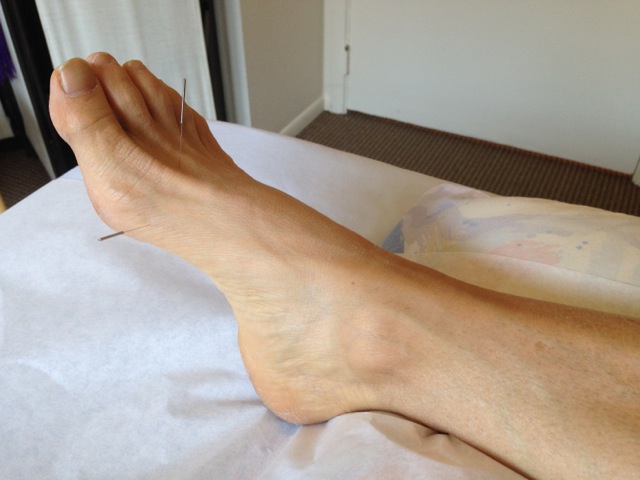
How Does Acupuncture Work?
Pain or disease of tissues generally involves restriction of blood flow through the ailing tissue or organ, which starves the tissue, organ, or gland of nutrients, resulting in impaired metabolism.
The acupoints generally lie adjacent to neural bundles. When we insert a needle, this stimulates a nerve impulse to the central nervous system, which relays the impulse to the region of the body that needs therapeutic attention. Twirling the needle also may activate a very weak current through the fascia.
Needling generally generates a parasympathetic (rest and digest) neuroendocrine response. In other words, it causes the whole system to lose tension and relax deeply. This allows the body to heal itself.
Specific points stimulate an increase of flow of blood to and from the ailing area. Increased blood flow brings in oxygen and nutrients while removing waste products of metabolism.
Increased oxygen supply allows the ailing tissues to "breathe" and generate energy ("qi", pronounced "chee"), increased nutrient supply allows repairs to take place, and removal of toxins reverses inflammatory processes that damage tissues, organs and glands.
In short, therapeutic needling works by inducing a relaxation response and increasing the flow of fresh, oxygen- and nutrient-rich blood to starved tissues, organs, and glands.
Research at the University of Michigan indicates that therapeutic needling also improves the brain's opioid binding ability, which allows your body's natural opioids to regulate pain without drugs.
What Conditions Can Acupuncture Treat?
Take a look at our page "Conditions Acupuncture Can Treat" to get a full list of conditions that needle therapy can treat.
Learn how acupuncture benefits general health
How Does Acupuncture Feel?
Needled points typically feel slightly warm during needling, and may feel mildly sore, achy, numb, heavy, distended, or swollen. Generally acupuncture causes a slight spasm-like sensation in the local muscles; this signifies "arrival of qi" (chee) and good treatment effect. Generally within 5-10 minutes of needle insertions, you will feel deeply relaxed and may fall asleep during the treatment period.
Is Acupuncture Safe?
Needle therapy generally has a high level of safety but certain minor adverse effects may result, including but not limited to: local bruising, minor bleeding, dizziness, fainting, pain, or aggravation of symptoms existing prior to treatment.
Needling points over the rib cage (lungs) involves a very rare potential risk of pneumothorax. No licensed acupuncturist holding a NCCAOM certification has ever caused a pneumothorax by needle therapy. The few cases that have occurred were performed by medical doctors or unlicensed individuals administering acupuncture incorrectly.
In my practice I rarely use points over the lungs. Primarily I use points on the arms and legs below the elbows or knees. Many years of experience have demonstrated that these points generally have excellent therapeutic effect with minimal risk.
Cold Laser Acutherapy
Since many people do not like needles, we also offer cold laser acupuncture.
The images below are from a study of laser acupuncture technique on a single point on the forearm.
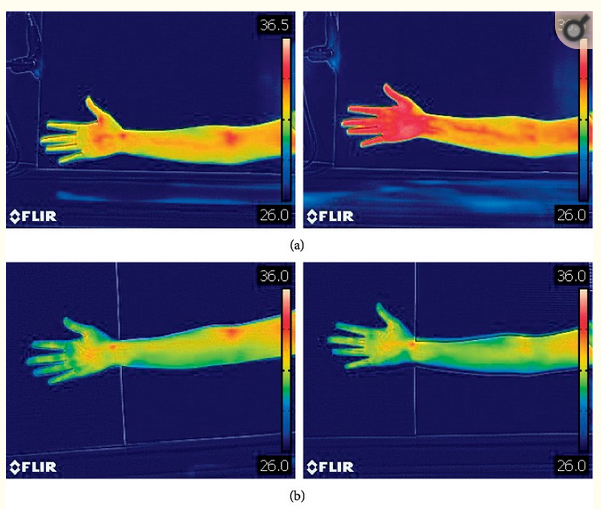
(a) before (left) and after (right) laser acupuncture on Neiguan (P6) point about 2 inches above the wrist crease between the tendons.
(b) before (left) and after (right) laser acupuncture on a non-specific point near Neiguan.
As you can see, proper application of the cold laser properly on a genuine acupoint (top images) results in a dramatic increase in blood flow and warmth (red areas) of the arm. This increased blood flow induces relaxation, repair and revitalization of the body.
Learn more about Don Matesz, L.Ac.
Now seeing clients in person at:
The Retreat, LLC
7118 Summerfield Rd
Lambertville, MI 48144
Call To Make Appointment:
734-773-6773
Telemedicine:
602-954-8016
Recent Articles


-
Whole Foods Plant-Based Diet
Oct 02, 23 07:02 PM
Heal yourself with a whole foods plant-based diet. -
Chinese Herbs and Acupuncture in Lambertville Michigan
Oct 02, 23 01:43 PM
 Affordable Chinese herbs and acupuncture near Toledo Ohio. Try Barefoot Acupuncture Clinic at the Retreat in Lamberville, MI.
 -
Regular acupuncture benefits rheumatoid arthritis patients.
Oct 31, 19 02:17 PM
A 2018 study published in Evidence Based Complementary and Alternative Medicine Journal found that clinical trials indicate that regular acupuncture over at least 3-12 weeks improves condition and qua… -
Acupuncture and herbal medicine reduce ringing in ears
Oct 30, 19 02:17 PM
"Acupuncture provides tinnitus relief. Luoding City Hospital of Traditional Chinese Medicine (Guangdong, China) researchers determined that acupuncture combined with the herbal formula Liu Wei Di Huan… -
Origin of "Barefoot Acupuncture"
Sep 28, 19 02:24 PM
Origin of "barefoot acupuncture" for our clinic name. -
Complementary facial rejuvenation session.
Sep 28, 19 01:35 PM
During the month of October 2019, receive a complementary facial rejuvenation treatment ($35 value) with any new patient or follow-up acupuncture treatment! Use this code to claim your free facial rej… -
Acupuncture as an alternative to opioids.
Sep 28, 19 01:29 PM
Conventional medical professionals have a growing interest in use of acupuncture instead of opioids for chronic pain. -
Acupuncture a 'Realistic Option' vs HRT for Hot Flashes
Apr 10, 19 01:50 PM
I have had many patients report less hot flashes with regular acupuncture. We also have Chinese herbal formulas that are very effective for controlling menopausal hot flashes and night sweats. Medscap… -
Chinese Herbal Medicine
Oct 31, 18 01:26 PM
Quality Chinese herbal medicine can help resolve a wide variety of conditions. -
Chinese herbal medicine improves circulation and reduces cold hands and feet
Oct 18, 18 05:00 PM
Tangkuei Decoction for Frigid Extrimities Plus Evodia and Fresh Ginger is a traditional Chinese medicine for cold hands and feet. In Japanese it is called Tokishigyakukagoshuyushokyoto. This study fro…
